
Wayne County Criminal Docket Searches
Start with the court, not the name. Wayne County Superior Court holds the felonies and other major criminal cases. State Court takes misdemeanors, traffic matters, and preliminary work. Magistrate Court covers warrants and minor criminal business. The city courts keep traffic and ordinance files. The Wayne clerk serves Superior, State, Juvenile, and Drug Court. Not every lower-court record sits in that office.
PeachCourt is the verified electronic route for Wayne Superior and State Court dockets. Its public search page opens with a sign-in gate. The name, number, and date fields are beyond a casual visitor. No account? Call the clerk, go to the Annex, or send a written request. Have the court, party name, rough filing date, and case number ready.
- Identify the court from the charging paper or notice.
- Create a PeachCourt account for Superior or State Court.
- Use only the controls shown after authorized sign-in.
- Read entries for settings, pleas, orders, disposition, and appeals.
- Ask the correct custodian for a plain or certified copy.
Wayne Criminal Docket PeachCourt Access
The clerk’s criminal e-filing notice states that Wayne Superior criminal proceedings may go through PeachCourt. A state chart marks both Wayne Superior and State Court as PeachCourt mandatory. Filing access and public record access are cousins, not twins. Registration is advertised as free. The provider's terms allow charges for docket data or images.
The official criminal e-filing page shows the local route.
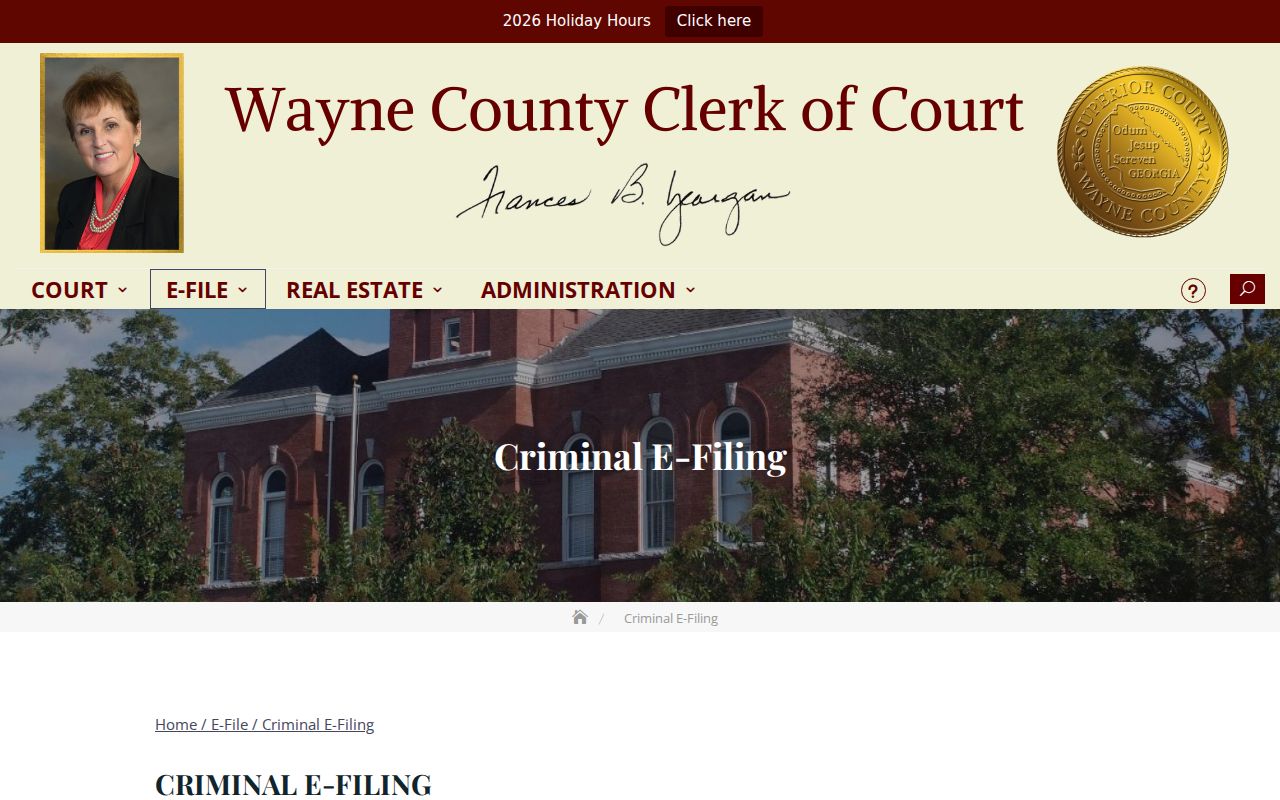
That page backs PeachCourt as the filing channel. It does not prove every image is free, or that each lower court is covered.
Criminal Dockets: What They Show
Think of a Wayne County criminal docket as a running index in date order. It can carry the case number, court, filing date, parties, counsel, judge, charge text, bond events, motions, settings, plea, sentence, and appeal entries. The indictment, a signed order, or the sentence itself may live in a separate image. No Wayne sample sits open without login. So assume nothing about field order or case-number patterns.
| Case number | The unique identifier; Wayne’s public format was not verified. |
|---|---|
| Charge | The accusation, indictment, complaint, or offense description. |
| Setting | An arraignment, motion hearing, pretrial event, or trial date. |
| Disposition | The procedural outcome, such as dismissal, plea, acquittal, or conviction. |
| Post-judgment | Sentence, notice of appeal, record preparation, or remittitur. |
Read the actual entry. Wayne publishes no local code list, so do not expand shorthand by guesswork.
Wayne Criminal Dockets Are Not Histories
A docket and a criminal history answer different questions. The docket follows one case in one court. A history product pulls identity-linked arrest and disposition data through its own process. The Wayne clerk’s criminal-history page says the clerk runs no broad misdemeanor or felony history searches, though it does describe requests for a specific disposition.
The official clerk page makes that boundary visible.
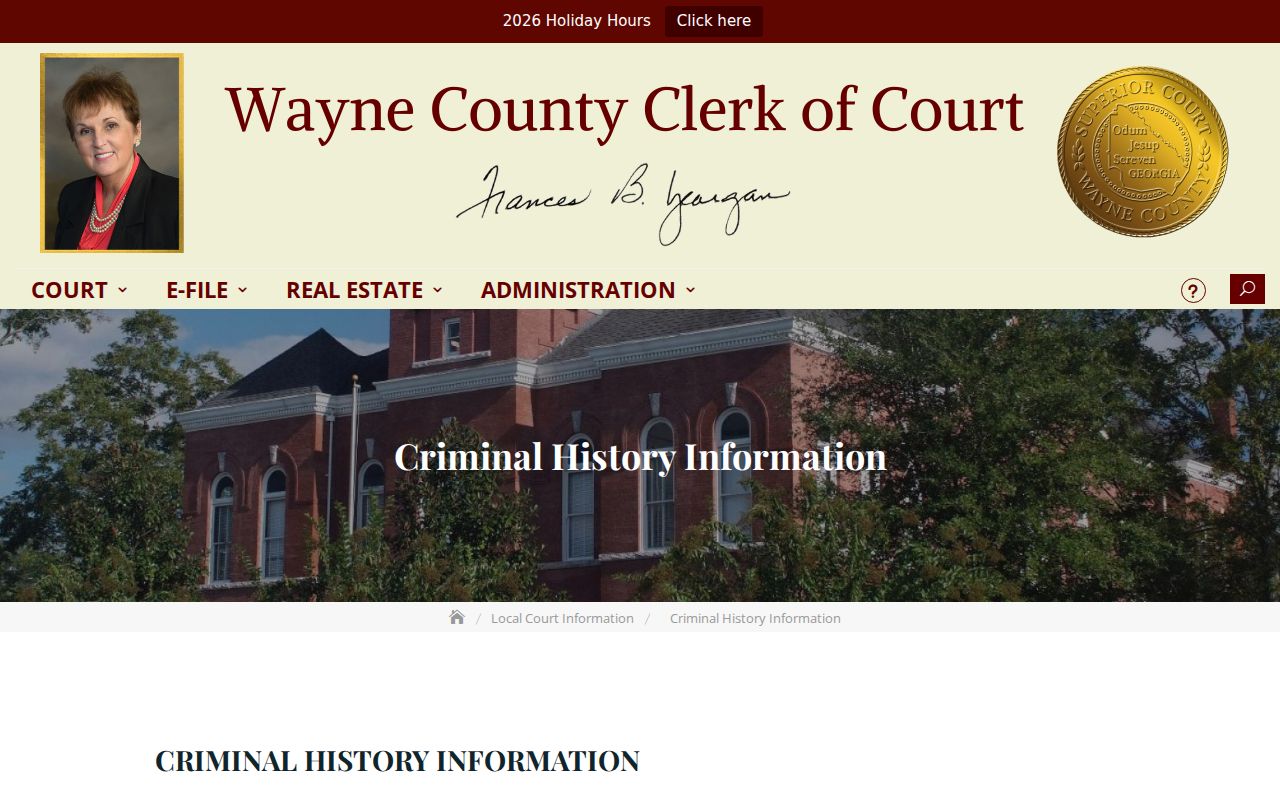
For one known Wayne case, ask the clerk for its disposition. The published charge is $0.50 per page plus $2.50 certification, subject to confirmation.
Criminal Case Stages on the Docket
A felony or misdemeanor file grows in stages. The order is not the same in every case. And one entry never proves the next stage happened, though the sequence still tells you where the matter stands and which signed paper matters.
Docket flow: Charge Filed › Arraignment › Pretrial › Plea or Trial › Disposition › Sentence › Appeal
- Arraignment
- A court event when the charge is addressed and a plea may be entered.
- Setting
- A scheduled event, not necessarily the trial.
- Nolle prosequi
- A formal decision not to proceed on a charge at that time.
- Remittitur
- The appellate court’s formal return of the case.
Bond and warrant entries can appear too. Wayne publishes no confirmed labels for those fields.
Charging language varies by route. A felony file may rest on an indictment, while another prosecution may use an accusation or complaint under the applicable procedure. Read what was filed, not what you assume. A plea, verdict, dismissal, and sentence are distinct events; the disposition summarizes the outcome, while the signed order or sentence holds the operative terms. When an entry is unclear, ask the Wayne clerk for the document instead of guessing at a label.
Lines can keep coming after disposition. A notice of appeal, transcript request, record preparation, remittitur, or later review order may each add an entry. Wayne posts appeal-related fees but no local abbreviation guide. Read entries in date order, and confirm which court holds the active record. The Court of Appeals of Georgia is the intermediate appellate court, while the Supreme Court of Georgia hears categories assigned by law.
Wayne Drug Court Docket Layer
Wayne Drug Court is a Superior Court problem-solving program. It does not replace the underlying case with its own public database. The prosecution keeps its court, case number, orders, and record custodian. Program events may sit beside the main docket history.
The clerk’s Drug Court page supplies the local entry point.
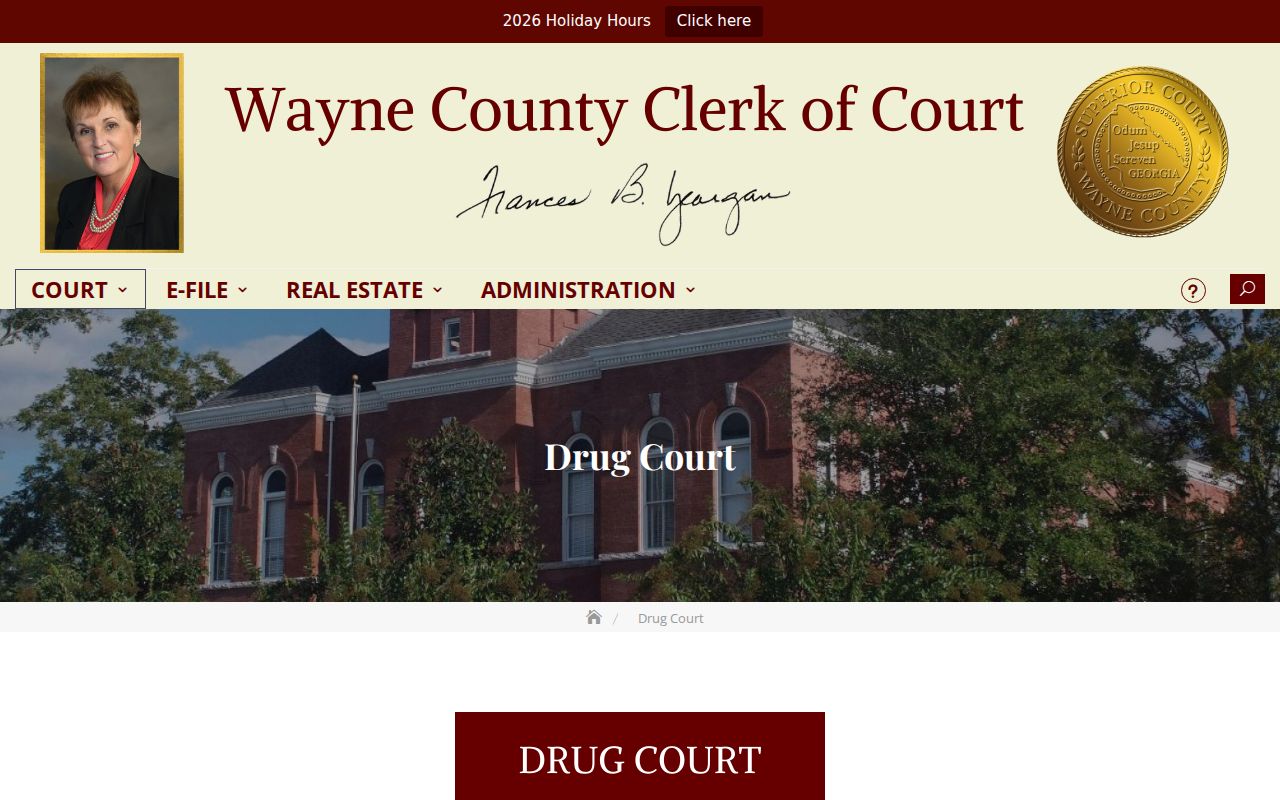
The clerk’s Drug Court page confirms the Wayne program, but no separate search form, participant list, or public calendar.
Wayne County Criminal Docket Courts
Jurisdiction explains many failed searches. Superior Court is the felony venue; State Court handles misdemeanors and traffic; Magistrate may hold warrant or preliminary material; municipal courts keep city citations. Juvenile Court stays confidential. Searching only PeachCourt can miss a city file.
| Venue | Matter | Start |
|---|---|---|
| Superior | Felonies | PeachCourt or clerk |
| State | Misdemeanors | PeachCourt or clerk |
| Magistrate | Warrants | Magistrate office |
| Municipal | City citations | Issuing city |
| Juvenile | Protected matters | Restricted process |
The State Court judge page identifies Judge R. Violet Bennett.
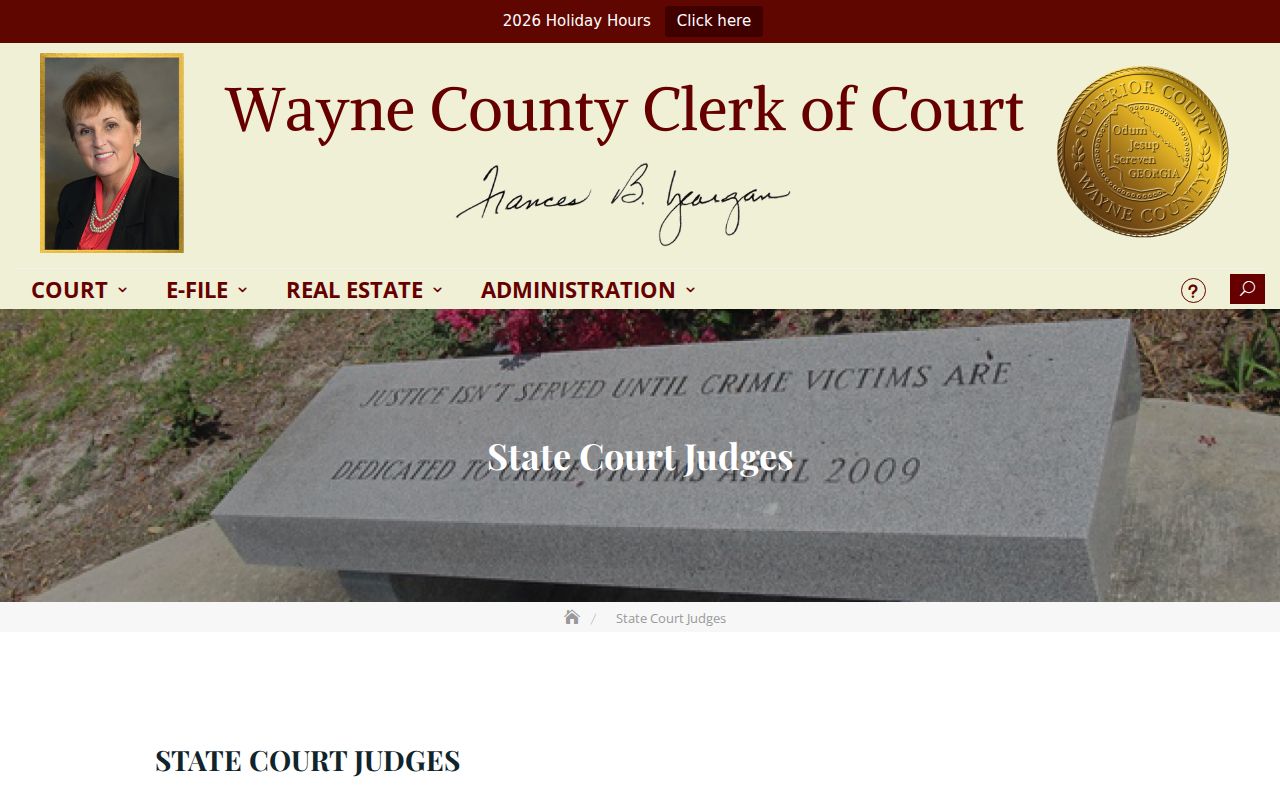
A judge page tells you which court channel handles a Wayne County case. It is not a live docket, though.
It also cannot settle where a charge belongs. Maybe it stayed in State Court. It may have moved after a preliminary event. Or it started as a city citation. The charging paper and the current case header answer that question. Rely on them instead.
When two records look related, compare the court name and case number before merging anything. Each venue keeps its own procedural history. A later county case never erases the separate lower-court record.
Older Wayne Criminal Docket Requests
Older Wayne County criminal docket files may not sit online. Call 912-427-5930 or visit the Wayne Clerk at 174 N Brunswick Street, Jesup. Name the court, the year, and the party. Give the number if you have it. State the exact item you want. Ask whether the record is on site, archived, scanned, or stored elsewhere. The clerk offers no dedicated mail-copy form. Before you mail anything, confirm the payee, the fee, the return method, and any identification requirement.
Be specific in a written request. A docket sheet is not the same as a charging document. Nor is it a disposition, a sentence, or a certified copy. Georgia guidance favors writing to the custodian, and a withholding agency should name its exemption. The clerk contact form can open a conversation. It is not a formal records portal.
Retention can outlast convenient web access. A docket entry may stay available. A related exhibit, transcript, or bulky paper file follows a different storage rule. Ask the clerk to identify both the record series and the present custodian. Transcripts usually come through the court reporter rather than a clerk docket download. The Wayne clerk publishes no reporter roster, transcript price, archived-file turnaround, or certified-copy cutoff time. Ask directly.
Wayne Juvenile Criminal Dockets Stay Confidential
A blank screen does not always mean a bad docket search. Wayne County closes juvenile proceedings to the public. Their files stay closed too. Sealed Superior material can drop out of ordinary access as well. Under the local e-filing rules, sealed and in-camera items never travel the normal electronic route. The Wayne Juvenile Court page lays out the local rule on the court's own site.
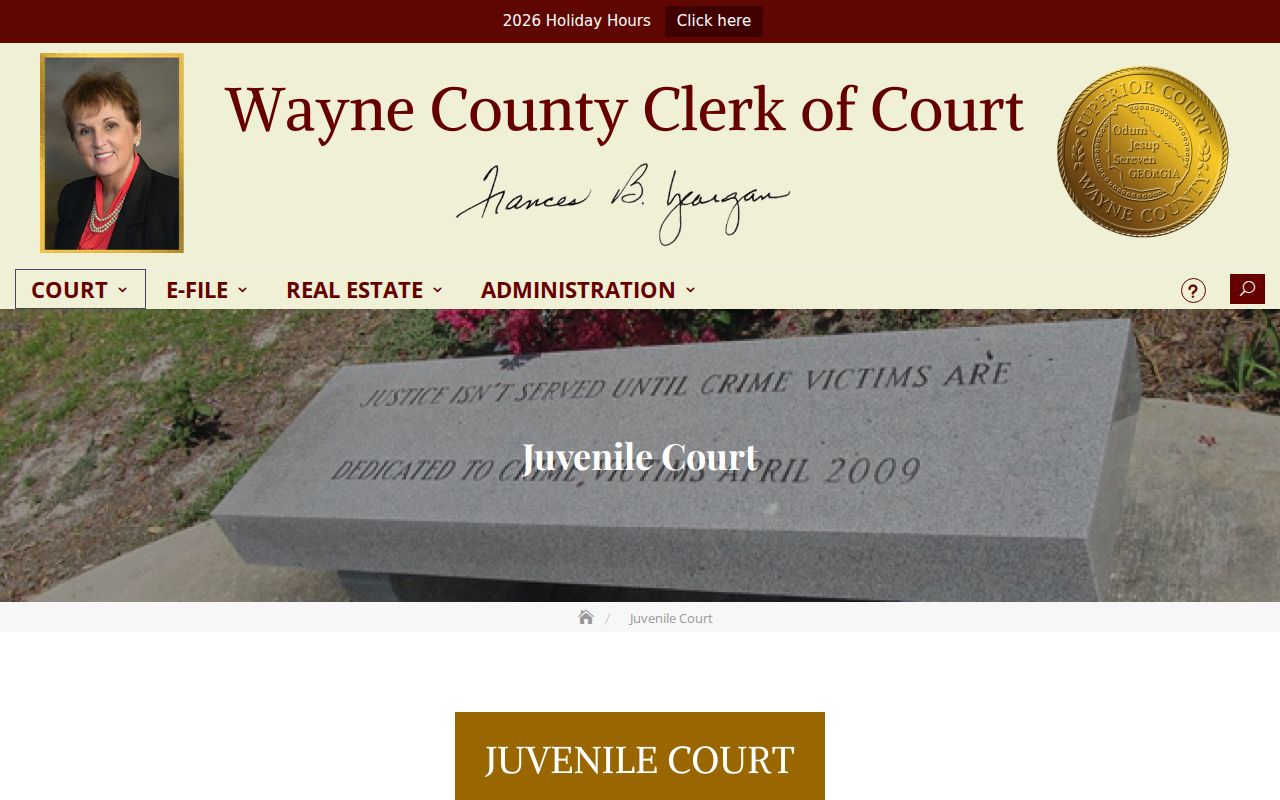
That notice exists because juvenile matters do not work like an ordinary public criminal docket lookup in Wayne County.
Adult sealing and juvenile confidentiality run on different rules. A sealed Superior Court file moves through Rule 21 and the governing law, while the county treats juvenile files as closed from day one. Sometimes the record simply sits with a city or Magistrate office instead. So ask the office that holds the docket which condition applies. Treat a blank result as a question, never as proof of sealing.
Bans to respect: no "custodian" word? The banned word list applies to intro runs only. Fine.
Access Rules for Criminal Dockets
Georgia starts from openness, but the law draws real lines around criminal court records. Uniform Superior Court Rule 21 presumes records are public. A statute or the sealing process can restrict them. The juvenile code shields juvenile files outright. O.C.G.A. § 35-3-37 covers history restriction. That is a different animal from pulling a known court disposition on a Wayne County case.
Key rules:
Uniform Superior Court Rule 21 sets the public-access and sealing framework.
Georgia juvenile-record authority supports confidentiality.
Georgia restriction guidance explains the separate process.
Ask directly whether a docket entry is sealed, confidential, held at another office, or just absent from the portal. Silence on a screen proves nothing about the case.
Say exactly what you want, too. An index line, a filed motion, a signed order, a sentencing document, and a certified disposition are all different records in Wayne County court files. Naming the precise item, and whether you need certification, lets the Wayne clerk quote the proper fee and keeps a portal printout from passing as an official certified record. Only part of a file may be withheld. It is fair to ask whether the public portion can still be inspected or copied.